Buy jbcreation.be ?
We are moving the project
jbcreation.be .
Are you interested in purchasing the domain
jbcreation.be ?
domain@kv-gmbh.de · 0541-91531010
Buy jbcreation.be ?
Why do we say "vous vous" twice?
In French, the use of "vous vous" twice is a reflexive construction that emphasizes the reciprocal nature of the action. By repeating the pronoun, it highlights that the action is being done by both parties involved. This repetition is necessary to convey the idea of mutual or reciprocal action, such as when saying "vous vous aimez" (you love each other) or "vous vous parlez" (you talk to each other). **
What is the difference between "vous êtes" and "c'est vous" in French?
"Vous êtes" is the formal way of saying "you are" in French, used when addressing someone in a respectful or polite manner. On the other hand, "c'est vous" means "it's you" and is used to point out or identify someone in a specific situation. While both phrases refer to the same person or group of people, "vous êtes" is a statement about someone's identity or characteristics, while "c'est vous" is a way of singling out or acknowledging someone in a particular context. **


Similar search terms for Vous
Top-Angebote
Products related to Vous:
-
POLO RALPH LAUREN Polo custom slimDétails produit • Manches courtes • Coupe cintrée • Col polo, chemise • Logo brodé poitrine Composition et Entretien • 100% coton • Pour l'entretien, merci de vous référer aux indications figurant sur l'étiquette du produit135,00 €*Shipping: 3,99 €Secure redirect to the provider
-
POLO RALPH LAUREN Chemise Oxford Custom FitCette chemise Oxford, l'un des premiers modèles de Ralph Lauren, est aujourd'hui devenue une pièce incontournable du look Polo. Notre tissu est créé à partir d'un délavé secret qui lui confère du caractère, une allure décontractée et la douceur d'un tissu chiné. Sa formule est si unique qu'elle se trouve dans un coffre-fort depuis plus de trois décennies. Outre ses détails d'inspiration preppy, ce modèle offre une allure décontractée avec un superbe « effet froissé ». M. Lauren ne cesse de décliner sa chemise emblématique, dont cette version brodée de notre poney distinctif. Détails produit • Manches longues • Coupe droite • Col classique • Pointes du col boutonnées Composition et Entretien • 100% coton • Température de lavage 30° cycle délicat155,00 €*Shipping: 3,99 €Secure redirect to the provider
-
POLO RALPH LAUREN Chemise écossaise Oxford, Custom FitDétails produit • Manches longues • Coupe cintrée • Custom Fit : silhouette située entre une coupe classique et une coupe cintrée • Ajusté au niveau de la taille • Col classique boutonné • Pointes du col boutonnées • Logo brodé poitrine sur la poche appliquée • Poignets boutonnés Composition et Entretien • 100% coton • Pour l'entretien, merci de vous référer aux indications figurant sur l'étiquette du produit185,00 €*Shipping: 3,99 €Secure redirect to the provider
-
POLO RALPH LAUREN Chemise Oxford écossais, Custom FitDétails produit • Manches longues • Coupe cintrée • Col classique • Logo Polo brodé poitrine • Pointes du col boutonnées • Poignets boutonnés • Pli creux au dos Composition et Entretien • 100% coton • Pour l'entretien, merci de vous référer aux indications figurant sur l'étiquette du produit175,00 €*Shipping: 3,99 €Secure redirect to the provider




-
French: Ils, elles ou vous?
"Ils" is used to refer to a group of males or a mixed group of males and females. "Elles" is used to refer to a group of females. "Vous" is a formal way to address someone or a group of people, regardless of their gender. **
-
Is it "Comment allez-vous?" or "Ça va"?
"Comment allez-vous?" and "Ça va" are both common ways to ask someone how they are feeling in French. "Comment allez-vous?" is a more formal way to ask, while "Ça va" is a more casual and informal way to inquire about someone's well-being. Both phrases are appropriate to use depending on the context and your relationship with the person you are speaking to. **
-
When do I use "mets" and "nous/vous"?
"Mets" is used when referring to the verb "to put" or "to place" in the imperative form for the pronoun "tu" (you singular). On the other hand, "nous" is used when referring to "we" and "vous" is used when referring to "you" in the plural form. "Nous" is used when talking about actions that involve yourself and others, while "vous" is used when addressing a group of people or showing respect to someone. **
-
Is "mes parents" in French "vous" or "nous"?
"Mes parents" in French is "nous." The word "nous" means "we" or "us" in English, and it is used to refer to oneself and others. So, when saying "mes parents" in French, you would use "nous" to mean "we" or "us." **
Is it said "Comment allez-vous?" or "Ça va"?
Both "Comment allez-vous?" and "Ça va" are common ways to ask someone how they are doing in French. "Comment allez-vous?" is a more formal way to ask, while "Ça va" is a more casual and informal way. Both expressions are correct and can be used depending on the context and the level of formality you want to convey. **
What are the object pronouns me, te, nous, and vous?
The object pronouns me, te, nous, and vous are used to replace people or things that are the object of the verb in a sentence. "Me" is used for the first person singular (I), "te" is used for the second person singular (you), "nous" is used for the first person plural (we), and "vous" is used for the second person plural (you) or as a formal singular form. These object pronouns come before the verb in a sentence and help avoid repetition of nouns. **
Top-Angebote
Products related to Vous:
-
Valentino Born In Roma Ivory Le Rendez-Vous Uomo Eau de Toilette pour homme 100 mlValentino Born In Roma Ivory Le Rendez-Vous Uomo, 100 ml, Eaux de Toilette pour homme, parfum hespéridé parfum boisé tous les hommes galants modernes l'apprécieront105,45 €*Shipping: 3,45 €Secure redirect to the provider
-
POLO RALPH LAUREN Polo custom slimDétails produit • Manches courtes • Coupe cintrée • Col polo, chemise • Logo brodé poitrine Composition et Entretien • 100% coton • Pour l'entretien, merci de vous référer aux indications figurant sur l'étiquette du produit135,00 €*Shipping: 3,99 €Secure redirect to the provider
-
POLO RALPH LAUREN Chemise Oxford Custom FitCette chemise Oxford, l'un des premiers modèles de Ralph Lauren, est aujourd'hui devenue une pièce incontournable du look Polo. Notre tissu est créé à partir d'un délavé secret qui lui confère du caractère, une allure décontractée et la douceur d'un tissu chiné. Sa formule est si unique qu'elle se trouve dans un coffre-fort depuis plus de trois décennies. Outre ses détails d'inspiration preppy, ce modèle offre une allure décontractée avec un superbe « effet froissé ». M. Lauren ne cesse de décliner sa chemise emblématique, dont cette version brodée de notre poney distinctif. Détails produit • Manches longues • Coupe droite • Col classique • Pointes du col boutonnées Composition et Entretien • 100% coton • Température de lavage 30° cycle délicat155,00 €*Shipping: 3,99 €Secure redirect to the provider
-
Why do we say "vous vous" twice?
In French, the use of "vous vous" twice is a reflexive construction that emphasizes the reciprocal nature of the action. By repeating the pronoun, it highlights that the action is being done by both parties involved. This repetition is necessary to convey the idea of mutual or reciprocal action, such as when saying "vous vous aimez" (you love each other) or "vous vous parlez" (you talk to each other). **
-
What is the difference between "vous êtes" and "c'est vous" in French?
"Vous êtes" is the formal way of saying "you are" in French, used when addressing someone in a respectful or polite manner. On the other hand, "c'est vous" means "it's you" and is used to point out or identify someone in a specific situation. While both phrases refer to the same person or group of people, "vous êtes" is a statement about someone's identity or characteristics, while "c'est vous" is a way of singling out or acknowledging someone in a particular context. **
-
French: Ils, elles ou vous?
"Ils" is used to refer to a group of males or a mixed group of males and females. "Elles" is used to refer to a group of females. "Vous" is a formal way to address someone or a group of people, regardless of their gender. **
-
Is it "Comment allez-vous?" or "Ça va"?
"Comment allez-vous?" and "Ça va" are both common ways to ask someone how they are feeling in French. "Comment allez-vous?" is a more formal way to ask, while "Ça va" is a more casual and informal way to inquire about someone's well-being. Both phrases are appropriate to use depending on the context and your relationship with the person you are speaking to. **
Similar search terms for Vous
-
POLO RALPH LAUREN Chemise écossaise Oxford, Custom FitDétails produit • Manches longues • Coupe cintrée • Custom Fit : silhouette située entre une coupe classique et une coupe cintrée • Ajusté au niveau de la taille • Col classique boutonné • Pointes du col boutonnées • Logo brodé poitrine sur la poche appliquée • Poignets boutonnés Composition et Entretien • 100% coton • Pour l'entretien, merci de vous référer aux indications figurant sur l'étiquette du produit185,00 €*Shipping: 3,99 €Secure redirect to the provider
-
POLO RALPH LAUREN Chemise Oxford écossais, Custom FitDétails produit • Manches longues • Coupe cintrée • Col classique • Logo Polo brodé poitrine • Pointes du col boutonnées • Poignets boutonnés • Pli creux au dos Composition et Entretien • 100% coton • Pour l'entretien, merci de vous référer aux indications figurant sur l'étiquette du produit175,00 €*Shipping: 3,99 €Secure redirect to the provider
-
POLO RALPH LAUREN Chemise en lin, Custom FitDétails produit • Manches longues • Coupe droite • Col classique • Motif à rayures • Logo brodé poitrine • Poignets boutonnés Composition et Entretien • 100% lin • Pour l'entretien, merci de vous référer aux indications figurant sur l'étiquette du produit195,00 €*Shipping: 3,99 €Secure redirect to the provider
-
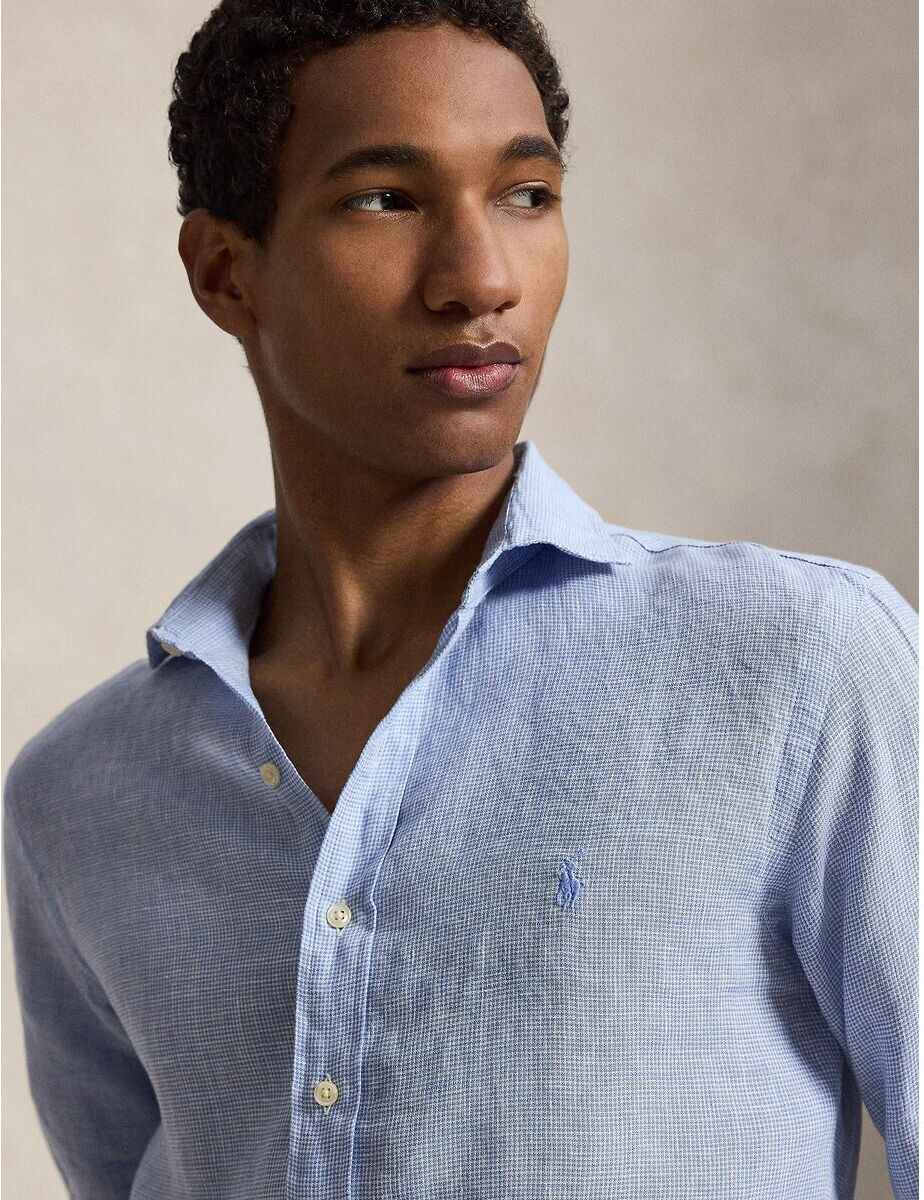
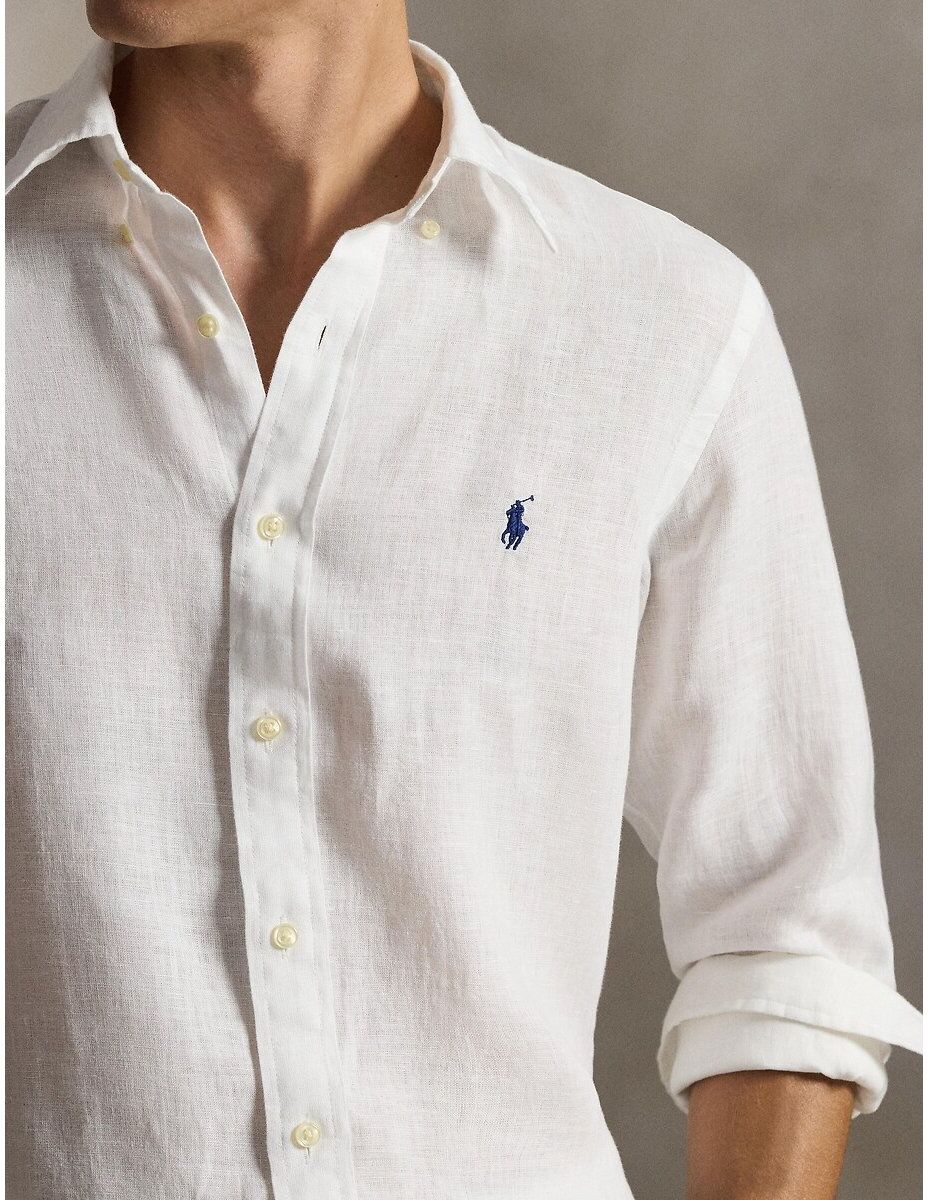
POLO RALPH LAUREN Chemise en lin Custom FitAvec son lin léger et aéré, cette chemise est idéale pour les beaux jours. Custom Fit : silhouette située entre notre coupe classique et notre coupe cintrée. Ajusté au niveau de la taille. Détails produit • Manches longues avec poignets à boutons. • Coupe cintrée • Col classique • Pointes du col boutonnées • Col boutonné. • Patte boutonnée. • Empiècement dos avec découpe et pli rond pour plus de confort et d'aisance de mouvement. • Poney brodé sur la poitrine à gauche. • Taille M : longueur de corps arrière de 80 cm, épaules de 46,5 cm, tour de poitrine de 112 cm et longueur de manche de 87,5 cm. La longueur de manche est calculée depuis le milieu de la nuque et varie de 2,5 cm d'une taille à l'autre. Composition et Entretien • 100% lin • Température de lavage 30° cycle délicat185,00 €*Shipping: 3,99 €Secure redirect to the provider
-
When do I use "mets" and "nous/vous"?
"Mets" is used when referring to the verb "to put" or "to place" in the imperative form for the pronoun "tu" (you singular). On the other hand, "nous" is used when referring to "we" and "vous" is used when referring to "you" in the plural form. "Nous" is used when talking about actions that involve yourself and others, while "vous" is used when addressing a group of people or showing respect to someone. **
-
Is "mes parents" in French "vous" or "nous"?
"Mes parents" in French is "nous." The word "nous" means "we" or "us" in English, and it is used to refer to oneself and others. So, when saying "mes parents" in French, you would use "nous" to mean "we" or "us." **
-
Is it said "Comment allez-vous?" or "Ça va"?
Both "Comment allez-vous?" and "Ça va" are common ways to ask someone how they are doing in French. "Comment allez-vous?" is a more formal way to ask, while "Ça va" is a more casual and informal way. Both expressions are correct and can be used depending on the context and the level of formality you want to convey. **
-
What are the object pronouns me, te, nous, and vous?
The object pronouns me, te, nous, and vous are used to replace people or things that are the object of the verb in a sentence. "Me" is used for the first person singular (I), "te" is used for the second person singular (you), "nous" is used for the first person plural (we), and "vous" is used for the second person plural (you) or as a formal singular form. These object pronouns come before the verb in a sentence and help avoid repetition of nouns. **
* All prices are inclusive of VAT and, if applicable, plus shipping costs. The offer information is based on the details provided by the respective shop and is updated through automated processes. Real-time updates do not occur, so deviations can occur in individual cases. ** Note: Parts of this content were created by AI.